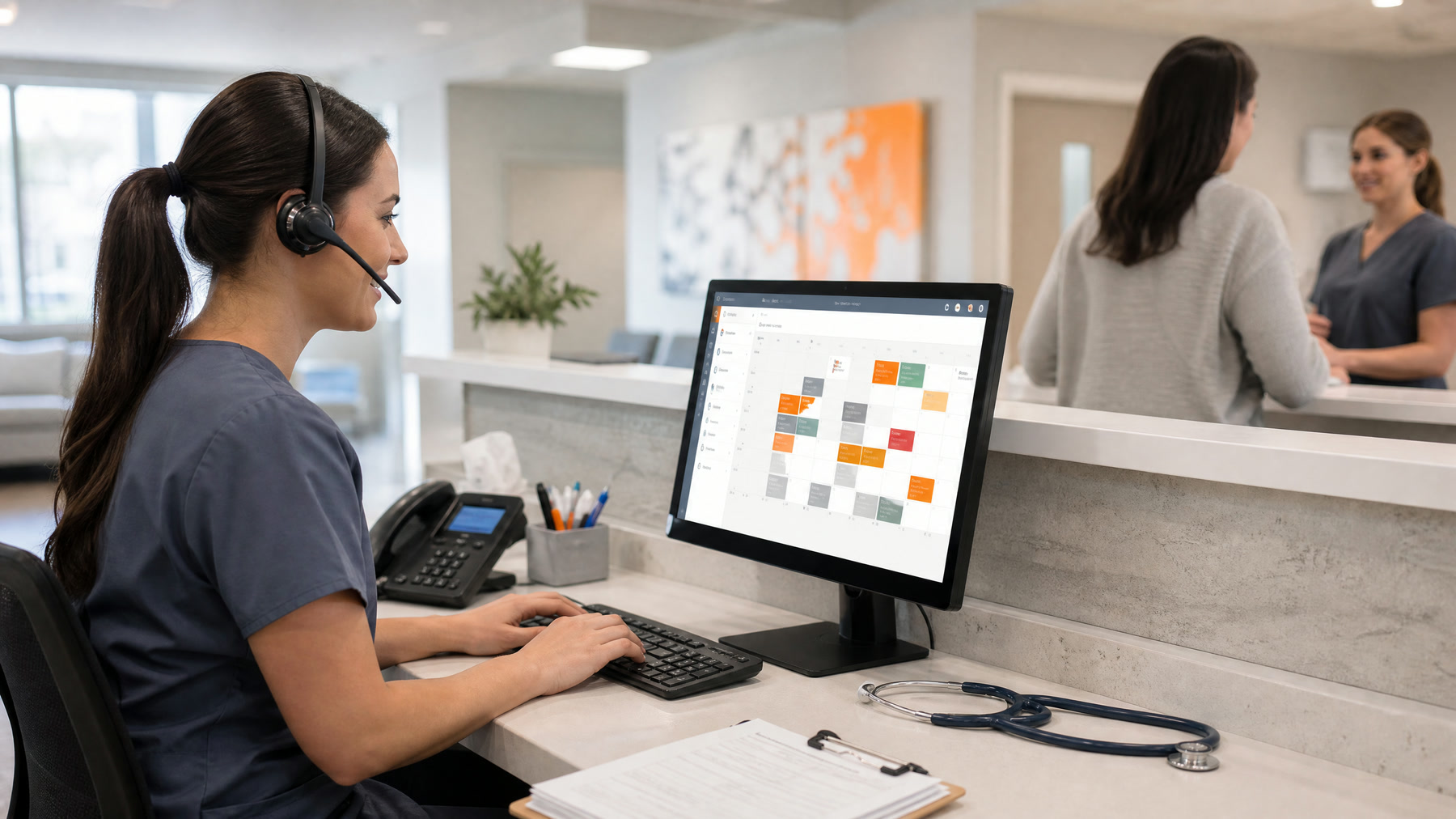
The Clinic Phone Problem
Clinic phones are full of repeatable work: scheduling, rescheduling, hours and directions, accepted insurance, preparation instructions, referral questions, and prescription-related routing. Staff need to care for patients in front of them, but the phone never stops, and patients who cannot get through either call back later, show up frustrated, or book elsewhere.
An AI receptionist can absorb a large share of routine calls while escalating anything clinical, urgent, or sensitive to people.
High-Value Workflows
Appointment scheduling
The agent identifies the visit type, checks provider availability, offers times, books the appointment, and sends a text confirmation with preparation instructions.
Rescheduling and cancellations
Many calls are simple changes. Automating them shortens hold times and lets the clinic refill slots from a waitlist.
New patient intake
Before the first visit, the agent can collect the reason for visit category, insurance basics, preferred provider, referral status, and accessibility needs, so the front desk is not re-asking at check-in.
Reminders and no-show reduction
Voice and text reminders confirm attendance, offer easy rescheduling, and free up slots early enough to fill. See how to reduce no-shows with AI reminders.
Routine questions
Hours, locations, parking, accepted insurance, telehealth availability, and what to bring are answered instantly.
What Should Always Go to a Person
- Anything that sounds like an emergency: the agent directs the caller to 911 and alerts staff
- Symptoms, test results, and medication questions
- Prescription refill decisions
- Billing disputes and complaints
- Callers who are distressed, confused, or ask for a person
Write these rules explicitly and test them with realistic calls before launch.
Compliance and Safety
Clinics are typically HIPAA-covered entities, and an AI receptionist creates protected health information as soon as a patient shares identifying details. That means Business Associate Agreements with the vendors that handle call data, collecting only what the workflow needs, verification before discussing existing appointments, and clear retention rules for recordings and transcripts. Our HIPAA checklist for AI receptionists walks through each item, and our guide to call recording consent laws covers disclosure.
Integration With Your Systems
The agent should book into the same scheduling system your staff use, with the right appointment types, durations, and provider rules. Where direct booking is not possible, it can capture structured requests for staff to confirm, which still prevents the call from being lost.
Human Escalation Is the Product
The goal is not to trap patients in automation. The best systems recognize urgent language, confusion, or frustration and transfer to staff with a summary, so patients never repeat themselves.
Measuring Success
- Calls answered and abandoned
- Appointments booked, including after hours
- Average hold time
- No-show rate after reminders
- Share of calls resolved without staff
- Patient complaints related to phone access
A Strong First Launch
Start with scheduling and routine questions for one location or service line, ideally after hours and on overflow. Review transcripts daily for the first two weeks, tune the flows, then expand into reminders and intake. Learn more about our work with healthcare clinics and AI appointment booking.