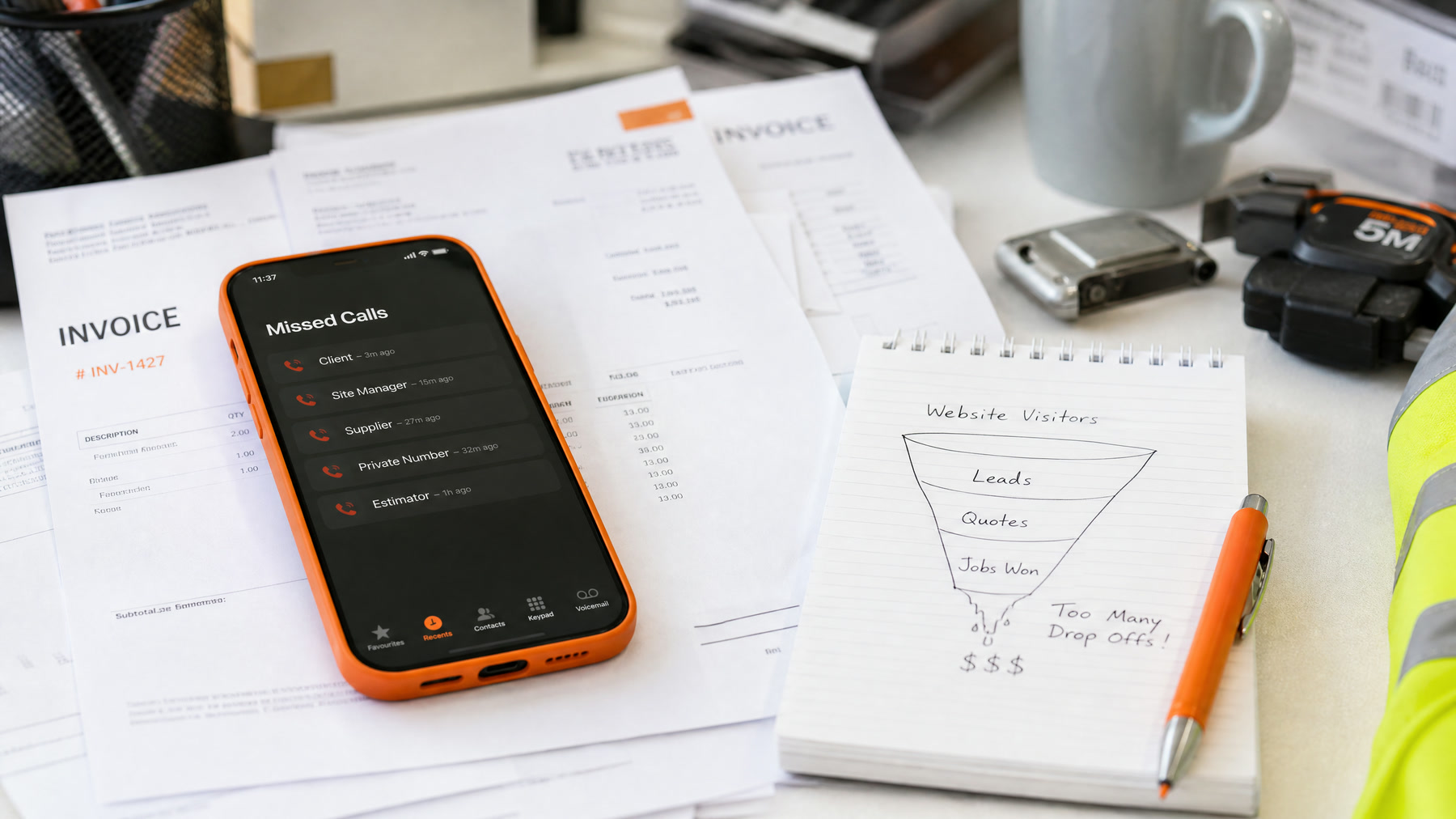
The Hours You Are Closed Are Not Quiet
For most service businesses, a substantial share of inbound calls arrive outside business hours. Evenings, weekends, lunch breaks, and the stretch between the last appointment and the office actually closing.
Those callers are not browsing. Someone calling a plumber at 9pm has a problem now. Someone calling a clinic at 7pm is booking because that is when they finally had a free minute.
What happens to those calls is a decision most businesses make by default rather than deliberately, and the default is usually voicemail.
The Four Options
Voicemail
The cheapest option and the most expensive one.
Most callers with an urgent need do not leave a voicemail. They hang up and call the next number in the search results. The ones who do leave a message have already started shopping, so by the time you call back the next morning you are competing against a company that answered.
Voicemail costs nothing and captures very little. It makes sense only if your after-hours volume is genuinely negligible, and you should verify that rather than assume it.
Call Forwarding to a Mobile
Forwarding the business line to an owner or on-call staff member.
This works, in the sense that calls get answered. The cost is human: someone is permanently on call, answering at dinner and on weekends, often for routine questions that could have waited. It works at small scale and stops working as volume grows, usually via burnout rather than a clean failure.
It also produces inconsistent coverage. Calls are answered when the person happens to be available and missed when they are not, which is the same unpredictability as voicemail with more disruption.
Traditional Answering Service
Human operators answer using your script and take a message.
The call is answered by a person, which matters for sensitive situations. The limitation is what happens next: operators handle many businesses at once, cannot see your calendar, and cannot book. You receive a message, and someone still has to call back, check availability, book, and update the CRM the following morning.
For genuine emergencies, they page your on-call contact, which is valuable. For routine booking calls, you have paid to receive a message about an appointment nobody has booked yet.
Pricing is typically per minute or per call, so busy months cost more, sometimes considerably.
AI Receptionist
Software answers, handles the call, and completes the transaction.
It checks real availability, books the appointment, sends the confirmation, writes the CRM record, and escalates or pages a human when the call needs one. Handles several simultaneous calls without a queue. Consistent at 2am and 2pm.
The limitations are real: it is weaker on genuinely unusual situations, requires setup effort and proper integration, and needs a well-designed escalation path or it will frustrate callers when it gets stuck.
The Comparison That Matters
| | Voicemail | Forwarding | Answering Service | AI Receptionist | | Call answered | No | Sometimes | Yes | Yes | | Books appointments | No | Yes | Rarely | Yes | | Updates your systems | No | Manually | Rarely | Yes | | Handles simultaneous calls | N/A | No | Limited | Yes | | Consistent quality | N/A | Varies | Varies | Yes | | Staff disruption | None | High | Low | Low | | Strong on unusual calls | No | Yes | Yes | Escalates | | Direct cost | None | None | Per minute or call | Monthly plus usage | | Hidden cost | Lost revenue | Owner burnout | Next-day callback labour | Setup effort |
Calculate Your Actual Cost
The comparison only becomes real with your own numbers. Work through this:
- Pull your phone records and count calls received outside business hours over the last month
- Estimate what share of those were genuine enquiries rather than spam or wrong numbers
- Take your average job or customer value
- Estimate your close rate on enquiries you actually reach
Multiply through and you have an approximate monthly value for after-hours demand. Then ask how much of it your current setup captures.
For a business doing meaningful ticket values, the arithmetic usually resolves quickly. For a business with very low after-hours volume or low ticket values, voicemail may genuinely be the right call, and it is worth knowing that rather than buying software you do not need.
What Good After-Hours Handling Does
Whichever option you choose, the requirements are the same:
Answers immediately. Every ring before a pickup increases the chance the caller has already moved on.
Identifies urgency. Emergencies and routine calls need different paths, and the system must separate them.
Completes something. The caller should end the call with a booked appointment, a confirmed callback time, or a dispatched technician. Not a promise.
Confirms in writing. An SMS with a specific time stops the caller shopping. A verbal promise does not.
Escalates honestly. When the system cannot help, it should say so and get a person involved rather than looping.
Captures everything. Every call logged with a transcript, so nothing depends on someone remembering.
The Hybrid That Works Well
Many businesses land on a combination, and it is often the right answer.
An AI receptionist takes first contact on every after-hours call. It handles the routine majority: hours, booking, rescheduling, basic questions, status. It triages for urgency. Genuine emergencies get paged through to the on-call person with full context. Sensitive or unusual calls route to a human answering service if you use one.
This means your on-call person is woken for actual emergencies rather than for someone asking what time you open, and routine bookings are captured instead of lost.
How to Choose
Answer three questions honestly.
What is your after-hours volume? If it is a handful of calls a month, voicemail is probably fine. Check the phone records rather than guessing.
What do those callers want? If most want to book or ask a routine question, an AI receptionist resolves them. If most need genuine human judgement, keep people involved.
What is a captured call worth? High ticket values make almost any coverage option pay for itself. Low ticket values make the cheap options more attractive.
Final Recommendation
The worst outcome is choosing by default. Most businesses are on voicemail not because they evaluated it but because nobody decided otherwise.
Pull one month of after-hours call data, categorise what those callers wanted, and price the options against the revenue the calls represent. For most service businesses with meaningful job values, answering those calls and completing the booking pays for itself quickly. For some, voicemail really is fine.
Either way, make it a decision.