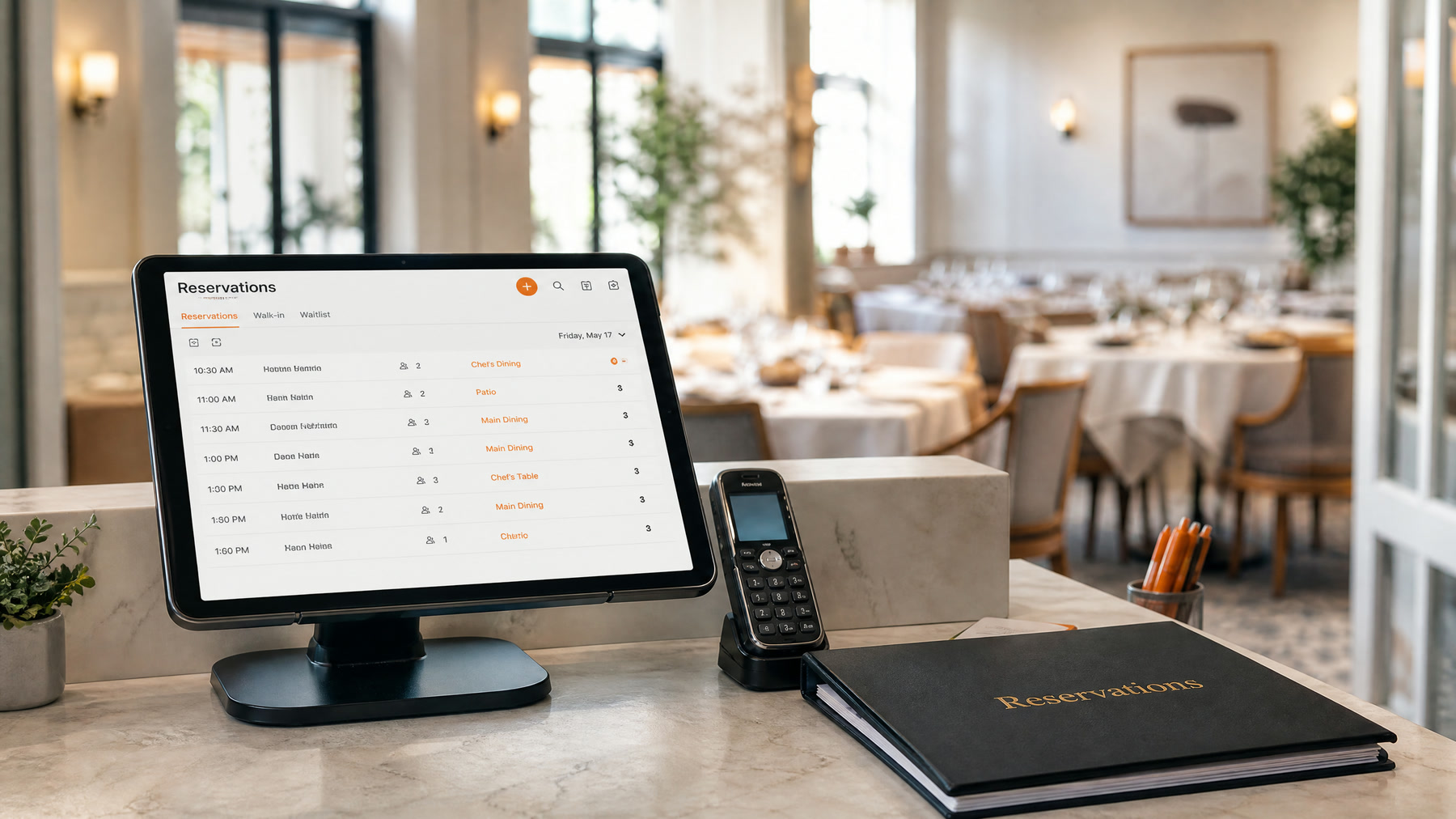
The Restaurant Phone Problem
A restaurant phone rings hardest exactly when nobody can answer it. Friday at 7pm, the host stand has a queue, the kitchen is on a wait, and the phone rings for the eleventh time.
Most of those calls are not complicated:
- "Do you have a table for four at eight?"
- "What time do you close tonight?"
- "Do you have parking?"
- "I want to order pickup."
- "Is there anything gluten free on the menu?"
Each one takes a minute of a staff member's attention during the moment when that attention is most expensive. Many simply go unanswered, and an unanswered reservation call is a table that goes to the restaurant down the street.
What an AI Receptionist Handles for a Restaurant
The routine call types map cleanly onto automation:
Reservations. Check real availability, take party size and time, book it into your reservation system, send an SMS confirmation. Handle changes and cancellations the same way.
Takeout orders. Take the order, confirm items and pickup time, push it to the kitchen ticket system or POS, send a confirmation with the total.
Hours, location, parking. Answer instantly and correctly, including holiday hours, without anyone walking to the phone.
Menu and dietary questions. Answer from your actual current menu, including allergen and dietary information, rather than a server's memory of last season's menu.
Waitlist status. Tell callers the current wait and add them to the list.
Large party and private events. Collect the details and route to whoever owns events, rather than losing the enquiry in a message pad.
The Calls That Should Still Reach a Person
Automation should not take every call. Route these to staff:
- Complaints about a meal or an experience
- Anything involving an allergy where a mistake has real consequences
- Press, supplier, and vendor calls
- Large private event negotiation once the basics are collected
- Anything the system cannot confidently understand
An AI receptionist earns trust by handing off cleanly, not by refusing to admit it is stuck.
Reservations: The Detail That Decides Success
Most restaurant automation fails on one thing: the reservation system integration.
If the agent takes a booking but does not write it into the same system the host stand is looking at, you have created a double-booking machine. The agent must read live availability and write to the same source of truth your floor staff use.
Before signing with any vendor, confirm:
- It reads live table availability, not a static schedule
- It writes bookings into the system your host stand actually uses
- It respects your real table configuration and turn times
- Cancellations and changes flow back correctly
- A same-minute booking race is handled without creating a conflict
If the vendor cannot integrate with your reservation platform, the automation will create more work than it saves.
Takeout Orders Need the Same Discipline
A takeout order that does not reach the kitchen is worse than a missed call, because the customer arrives expecting food.
Check that the system:
- Uses your live menu including daily specials and sold-out items
- Handles modifiers and substitutions correctly
- Confirms the order back to the caller before submitting
- Pushes to the kitchen with the same format as your other channels
- Sends the customer a confirmation with pickup time and total
- Fails loudly to a human if the POS connection drops
Peak Hours Are the Real Test
The value case for restaurants is concentrated in a few hours a week. During Friday and Saturday service, call volume spikes and staff availability bottoms out at the same time.
Software does not care that four calls arrive at once. Each caller gets answered immediately instead of hearing a ring-out or being put on hold while a server balances plates.
That is the difference between capturing a Saturday reservation and losing it.
What to Measure
Track these before and after launch so you know whether it worked:
- Percentage of calls answered during peak service
- Reservations booked by phone per week
- Takeout orders taken by phone per week
- Average time from call start to confirmed booking
- Escalation rate to staff, and what those escalations were about
- No-show rate, which usually improves when confirmations go out automatically
Read transcripts weekly for the first month. The questions callers actually ask will tell you exactly what to add to the knowledge base.
A Sensible Rollout
Do not automate everything on day one.
Start with hours, location, and reservations only, running after-hours and during peak service. Keep daytime calls with staff. Read every transcript for two weeks and fix the gaps.
Once reservations are clean, add takeout. Once takeout is clean, extend the hours the agent covers.
This order works because reservations are the highest-value call type and the easiest to verify. If the booking lands correctly in your system, you know the integration is sound before you trust it with food orders.
Final Recommendation
For restaurants, the strongest argument for an AI receptionist is not labour savings. It is that the phone gets answered at 7pm on a Friday, when every unanswered call is a table that was ready to book.
Start with reservations, integrate properly with the system your host stand uses, escalate complaints and allergy questions to people, and expand from there.