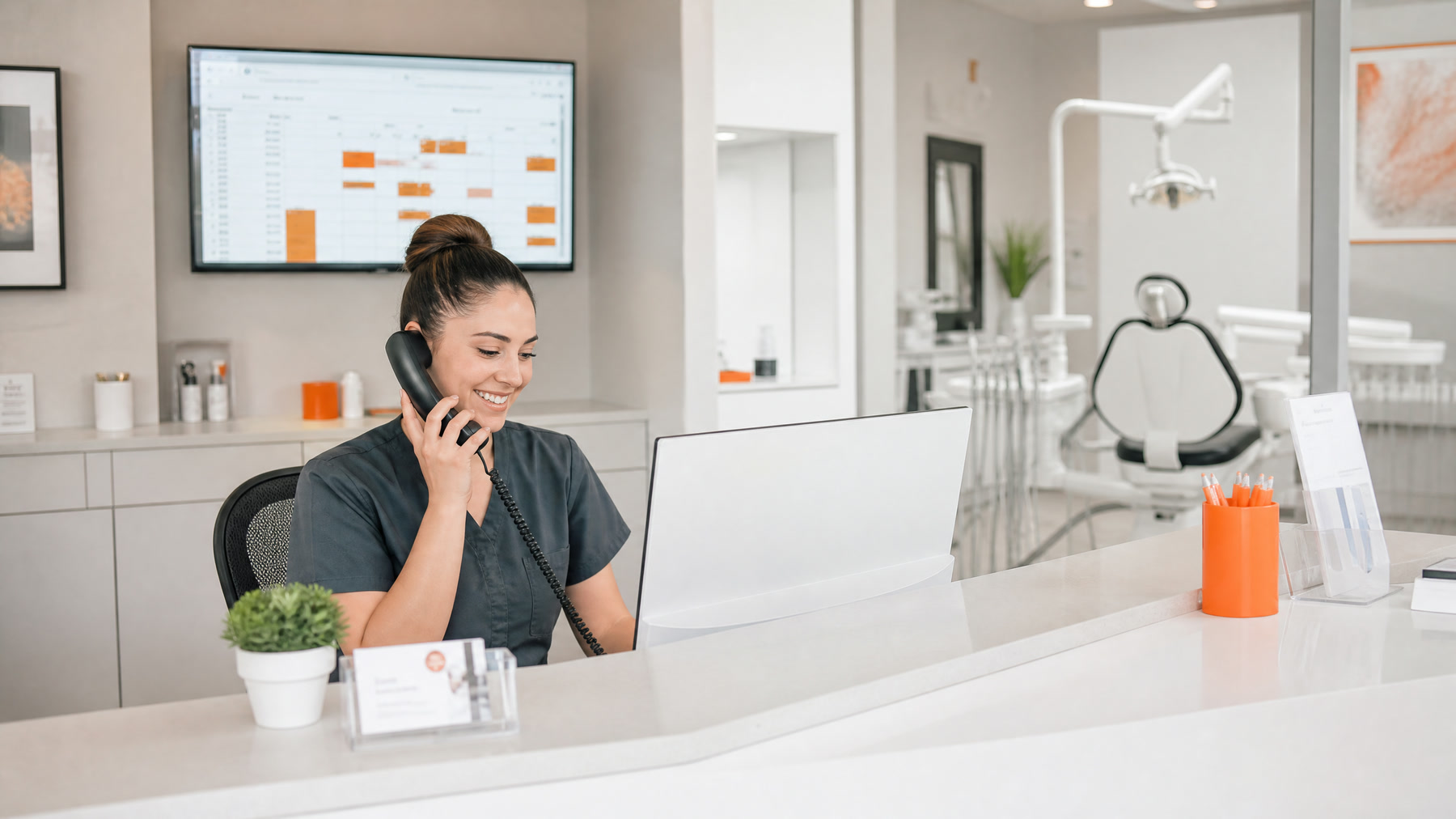
Dental Calls Are Perfect for Structured AI
Dental practices receive the same call types every day: new patient appointments, hygiene visits, emergency pain, cosmetic and implant consultations, insurance questions, rescheduling, and recall. These calls follow clear rules, which makes them a strong fit for an AI receptionist, and they are valuable enough that every missed call costs real revenue.
The front desk, meanwhile, is checking patients in, collecting payments, verifying insurance, and presenting treatment plans. The phone is usually the first thing to slip.
What an AI Dental Receptionist Handles
New patient inquiries. Explain what the first visit includes, whether you accept the caller's insurance, and book the new patient exam.
Emergency calls. Identify pain, swelling, trauma, or a broken tooth, collect details, and route to the emergency pathway you define.
Hygiene and recall booking. Book cleanings into the right provider's schedule with the correct appointment length.
Rescheduling and cancellations. Move appointments and offer freed slots to patients on a waitlist.
Treatment consultations. Book implant, orthodontic, and cosmetic consults, often the highest-value calls a practice receives.
Insurance and financing questions. Answer which plans you are in network with, whether you offer financing or membership plans, and route detailed benefit questions to staff.
After-hours calls. Book appointments and triage emergencies when the office is closed.
Emergency Calls Need Special Routing
Dental emergencies are where design matters most. Define clear rules:
- Possible medical emergency (facial swelling affecting breathing or swallowing, uncontrolled bleeding, serious trauma): tell the caller to call 911 or go to the emergency room, then alert staff
- Urgent dental problem (severe pain, knocked-out tooth, broken tooth): offer the next emergency slot or page the on-call dentist
- Non-urgent (lost filling without pain, minor chip): book the next suitable appointment
The agent should never give clinical advice beyond your approved instructions.
Insurance Questions Need Exact Answers
Insurance is one of the top reasons patients call. Configure the agent with the PPO plans you are in network with, how you handle out-of-network patients, whether you accept Medicaid or specific state programs, and your membership or cash options. When a question goes beyond what you have defined, such as a patient's remaining benefits, the agent should collect details for your team to follow up.
Recall Campaigns Are Underrated
Most practices have patients who are overdue for hygiene. With proper consent, an AI agent can call or text these patients, offer available times, and book directly into the schedule. Recall fills gaps in the hygiene column without staff spending hours dialing. Pair it with AI appointment reminders to reduce no-shows.
Practice Management Integration
The agent is most useful when it can read real-time availability and book into your practice management system. Where direct booking is not available, it can capture requests and create tasks for the front desk to confirm, which still recovers the call.
Privacy and HIPAA
Dental practices that bill insurance electronically are typically HIPAA-covered entities. The agent handles names, dates of birth, and reasons for visits, so every vendor in the call path that touches that data needs a Business Associate Agreement, and recordings need sensible retention and access controls. Our HIPAA checklist for AI receptionists covers what to verify.
Protect the Patient Experience
The agent should introduce itself as the practice's AI assistant, sound calm and concise, and move quickly to booking. Anxious patients, complaints, and billing disputes should go to a person with context.
What to Track
- New patient calls answered and booked
- Emergency calls routed and seen
- Hygiene and recall appointments booked
- After-hours bookings
- No-show rate
- Front desk hours freed per week
A Practical Rollout
Start with after-hours and overflow calls for new patients and emergencies, review transcripts for two weeks, then add rescheduling, recall, and reminders. Learn more about our work with dental practices or see a dental AI receptionist use case.