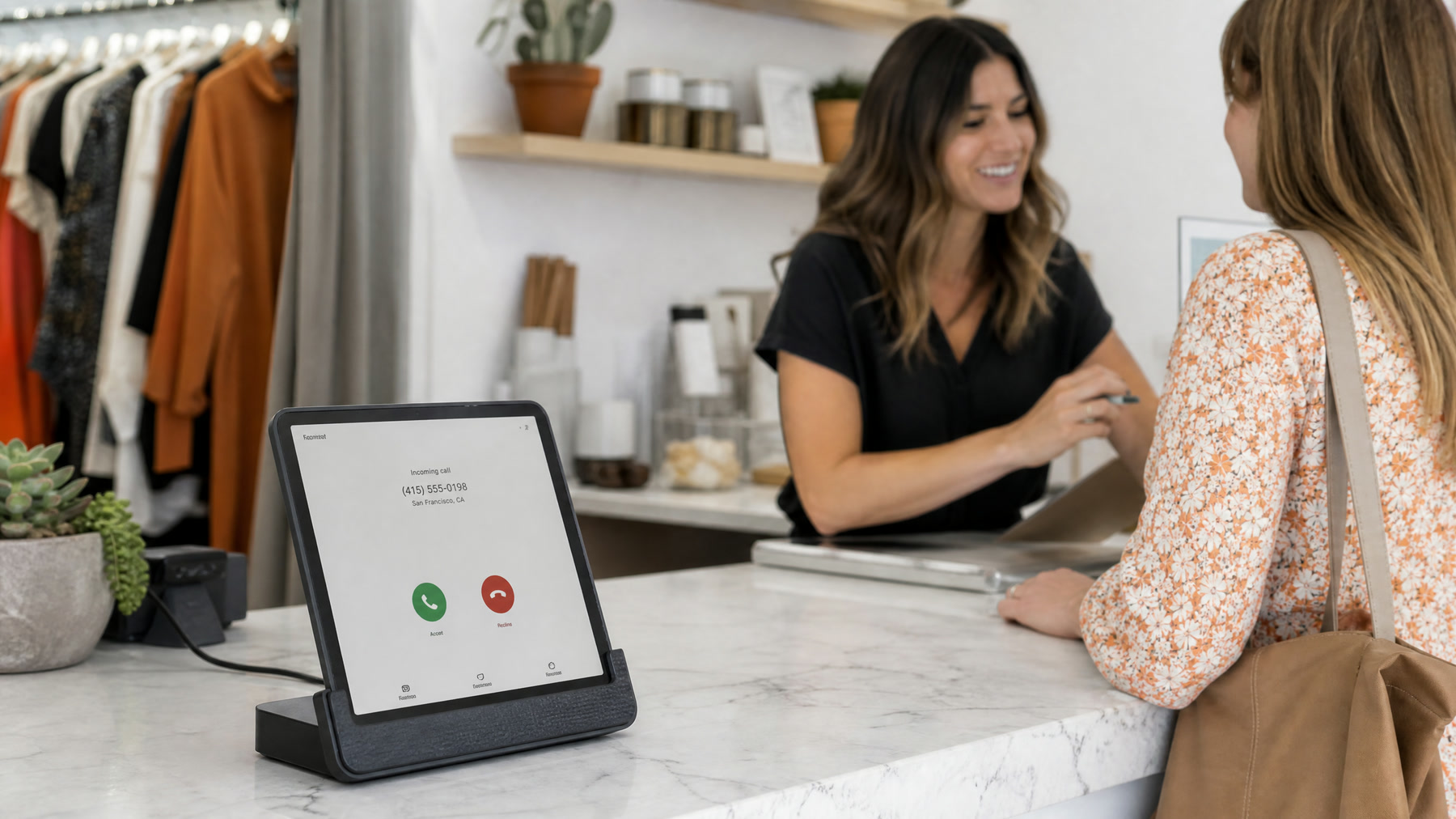
Why Phone Automation Is Practical Now
Small businesses have always needed better phone coverage. What changed is that AI voice agents can now hold natural conversations, ask follow-up questions, look up availability, and take action inside your existing tools.
An AI answering service is no longer a robotic phone menu. It can act as a front-desk layer for calls that are predictable, repetitive, or time-sensitive, and pass everything else to your team with notes attached.
The Calls to Automate First
Missed-Call Recovery
If a call goes unanswered, the system can text the caller within seconds, offer a callback, find out what they need, and book the next step. This is often the fastest return because those calls are already lost revenue. Our guide to missed-call automation covers how to size that leak.
After-Hours Calls
Evenings and weekends are when many customers finally have time to call. An AI agent can answer, book, take detailed messages, and route true emergencies to an on-call person. See after-hours call answering for small businesses.
Appointment Booking
Clinics, dental practices, salons, med spas, auto service departments, and home service companies all receive booking calls that follow repeatable patterns. An AI agent can check availability, collect details, and create the appointment directly in your scheduling software.
FAQs and Routing
Hours, pricing ranges, location, service areas, required documents, parking, and policies can be answered without pulling staff away from customers in front of them. Calls that need a specific person get routed with context.
Lead Qualification
The agent can ask about the job, timeline, location, and urgency. Hot prospects are transferred or flagged immediately, and lower-intent inquiries are captured for follow-up.
How It Connects to Your Existing Number
You do not need a new phone number. The common setups are:
- Overflow forwarding: your phone rings at the front desk first; if nobody answers after a few rings or the line is busy, the call forwards to the AI agent. Most carriers and business phone systems support "forward on no answer" and "forward on busy."
- After-hours forwarding: calls go to the AI agent on a schedule, such as evenings and weekends.
- AI first: every call is answered by the agent, which handles routine requests and transfers the rest to staff.
- Porting the number: moving your number to a new provider is rarely necessary and is usually the last option.
Most businesses start with overflow or after-hours forwarding. Your team keeps answering as usual, and the AI catches what would otherwise go to voicemail.
A Sample Call Flow
Here is a simplified after-hours call for a home service company:
- Agent: "Thanks for calling Lakeside Plumbing. This is the virtual assistant. How can I help?"
- Caller: "My water heater is leaking."
- Agent: "I'm sorry to hear that. Is water actively spreading, or is it a slow drip?"
- Caller: "A slow drip."
- Agent: "Okay. I can book the first available visit tomorrow morning, between 8 and 10. Can I get your address?"
- The agent books the slot, confirms the address and phone number, texts a confirmation, and logs a summary for the dispatcher.
If the caller had described active flooding, the agent would have given basic safety guidance and transferred the call to the on-call technician instead. For more examples, see our voice AI call flow examples and script templates.
AI Answering vs. a Traditional Answering Service
| Traditional answering service | AI answering service | |
|---|---|---|
| Pricing | Usually per minute or per call | Setup plus usage |
| Booking | Often takes a message for you to call back | Books directly when connected to your calendar |
| Consistency | Varies by agent and shift | Follows the same rules on every call |
| Calls at once | Limited by staff on shift | Many at the same time |
| Complex or emotional calls | Strong | Should hand off to a person |
Many businesses use both: AI handles routine calls and bookings, and people handle sensitive conversations. Compare the options in AI receptionist vs. answering service and Smith.ai vs. Ruby vs. a custom AI receptionist.
What Not to Automate First
Do not start with emotionally sensitive complaints, billing disputes, complex edge cases, or anything that requires professional judgment. Those should go to a person quickly. The best voice AI systems are designed to know when to stop handling a call.
What a Production Setup Needs
- A clear call flow for each major caller intent
- Rules for booking, rescheduling, cancellation, and escalation
- Integrations with your calendar, CRM, field service, or practice management software
- A transfer path to a real person, with a fallback when nobody picks up
- Call transcripts and summaries your staff can read in seconds
- A recording disclosure where you record calls, since some states require every party's consent. See call recording laws by state.
- Weekly review of confusing or failed calls in the first month
What It Costs
Expect a setup cost to design and connect the system, plus monthly usage that scales with call minutes. Compare that against the revenue from calls you currently miss. Our AI receptionist cost guide and cost calculator help you run the numbers for your call volume, and our pricing comparison of eight services shows what ready-made options cost.
What to Measure
- Answer rate: the share of calls answered by a person or the AI, instead of going to voicemail
- Bookings from AI-handled calls
- Transfer rate and reasons, which show where the agent needs better instructions
- Time to callback for missed calls
- Complaints or hang-ups in the first seconds of the call
The Simple Starting Point
Start with one workflow: after-hours calls, missed-call recovery, or appointment booking. Launch it, monitor it closely for two weeks, improve the scripts, then expand into more call types. If you want help scoping it, our AI receptionist service starts with a review of your real call flow.