Why calls matter for insurance claims
Claims calls arrive in waves. A hailstorm, a hurricane, or an icy morning can multiply first notice of loss calls overnight, and policyholders calling after an accident or a house fire need answers right away. When hold times grow, customers abandon calls, file complaints, and remember the experience at renewal.
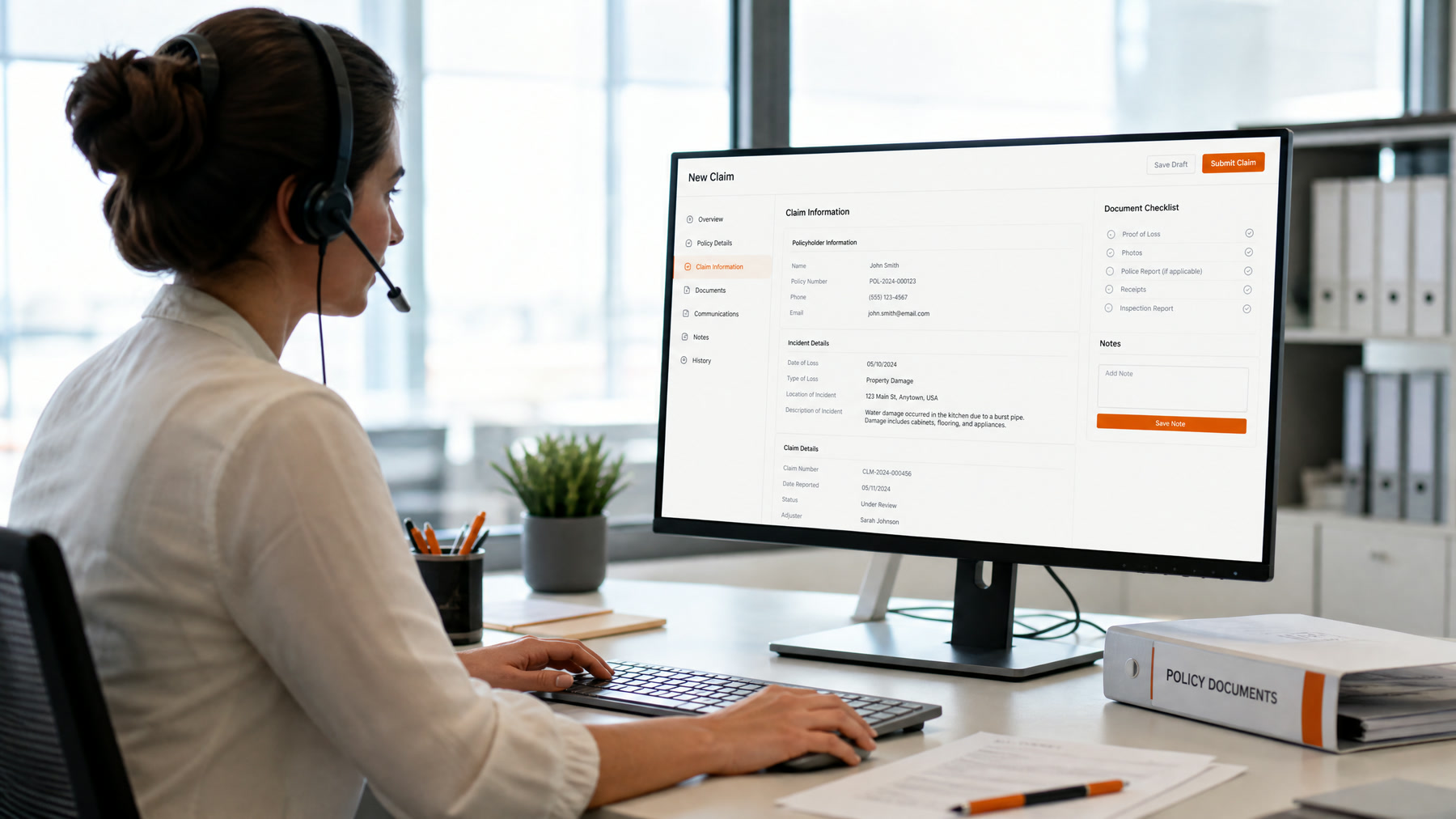
An AI voice agent takes first notice of loss around the clock, asks the right questions for each line of business, sends upload links for photos and documents, and routes injuries, uninhabitable homes, and vulnerable customers to a person. Adjusters start with a structured claim file instead of a voicemail.
Common call types
Automations
Benefits
What a call sounds like
An illustrative example of a typical call. Your receptionist follows your own rules, services, and wording.
What the AI receptionist asks
Urgent calls go straight to a person
Injuries, fires, or anyone in danger
The caller is told to call 911 first. The claim is flagged as urgent and sent to an adjuster or supervisor as soon as the caller is safe.
A home that is no longer livable
Routed to a person right away so temporary housing and emergency repairs can be discussed.
Distressed or vulnerable callers, or anyone who asks for a person
Transferred immediately, with the details collected so far.
Catastrophe events
The agent switches to your catastrophe script, captures the essentials quickly, and queues claims by severity for your adjusters.
Works with your software
We connect through each vendor's API, webhooks, or a workflow tool. What is possible depends on your plan and the vendor's API access, which we confirm before quoting.
What to get right
Implementation plan
Map question paths for each line of business and claim type.
Connect your claims system, document storage, and texting tools.
Write escalation rules for injuries, severe losses, and vulnerable callers.
Pilot after hours and during surges, then review intake quality with adjusters.
AI receptionist or a live answering service?
Claims lines already send overflow to outside call centers during catastrophe events, and the wait times in those weeks are the problem. An AI intake agent takes the first notice of loss from every caller at once, in the same structure each time, and hands injured or distressed callers to a person immediately.
A live answering service
- Operators answer from a script and take a message for you to return.
- Booking into your calendar is rare and usually costs extra.
- Callers can wait when operators are busy with other clients.
- Billed by the minute or by the call, so busy months cost more.
- Better for upset callers and one-off situations that need judgement.
An AI receptionist
- Answers from your own services, prices, service area, and rules.
- Books the appointment, sends the confirmation, and updates your records during the call.
- Answers every call at once, at any hour.
- A one-time build plus usage, quoted before work starts.
- Hands urgent or unusual calls to a person, with the details gathered so far.
More detail: AI receptionist vs answering service and the published prices of eight services.
What it costs
Focused automations such as missed-call recovery typically cost $2,000 to $5,000 to build. A production AI receptionist with booking, CRM updates, and call transfers typically costs $5,000 to $15,000, plus monthly usage for calls and texts. Every quote is fixed-scope and in US dollars. See pricing details.
FREE CALL-FLOW REVIEWRelated services
FAQs
Can AI collect claim details?
Yes. It asks structured questions for each line of business, collects photos and documents by text, and prepares a claim summary for review.
Can it make claim decisions?
No. It handles intake, status updates, and routing. Coverage, liability, and payment decisions stay with your adjusters.
Can it collect photos?
Yes. Secure upload links by text let policyholders send photos and documents, which are attached to the claim record.
Can it handle catastrophe call surges?
Yes. It answers many calls at once, captures the essentials, and queues claims by severity so adjusters see the most urgent first.
Does it integrate with Guidewire or Duck Creek?
We connect through the platform's APIs or an integration layer, depending on your environment and licensing. We agree the approach with your IT team before quoting.
Does it help with claims-handling rules?
It acknowledges claims quickly and keeps time-stamped records, but compliance depends on your processes. We build the call flow with your claims and compliance teams.
Related guides
Voice AI Compliance and Human Handoff: A Practical Checklist
AI VOICE AGENTSAre AI Voice Agents Replacing Call Centers? What to Automate and What to Keep Human
VOICE AI COMPLIANCECall Recording Consent Laws by State for AI Phone Agents
VOICE AI COMPLIANCEVoice AI Security and Privacy Checklist: 12 Controls Before You Launch
WORKFLOW AUTOMATIONAI Workflow Automation Error Handling: How to Stop Silent Failures
Sources
General information, not legal advice.
- Unfair Property/Casualty Claims Settlement Practices Model Regulation (National Association of Insurance Commissioners)